Maximale hoeveelheid explosieve stof

What I miss in architecture is the living. A building is given a function and then stands still. This work looks for the opposite: not a fixed purpose but an experience you walk through with your body, closer to film than to building.
What it is about
The starting point was a shared stairwell. Such a space is neither clearly private nor clearly public but something in between: apartments share their smells, their sounds and their traces there, and so share them with everyone who takes the stairs. The performance grew out of that doubleness — connection and distance at once.
The design puts the living body at its centre, and with it the sensory experience. Not the image you look at, but what you smell, hear and feel underfoot as you move through it.
The route
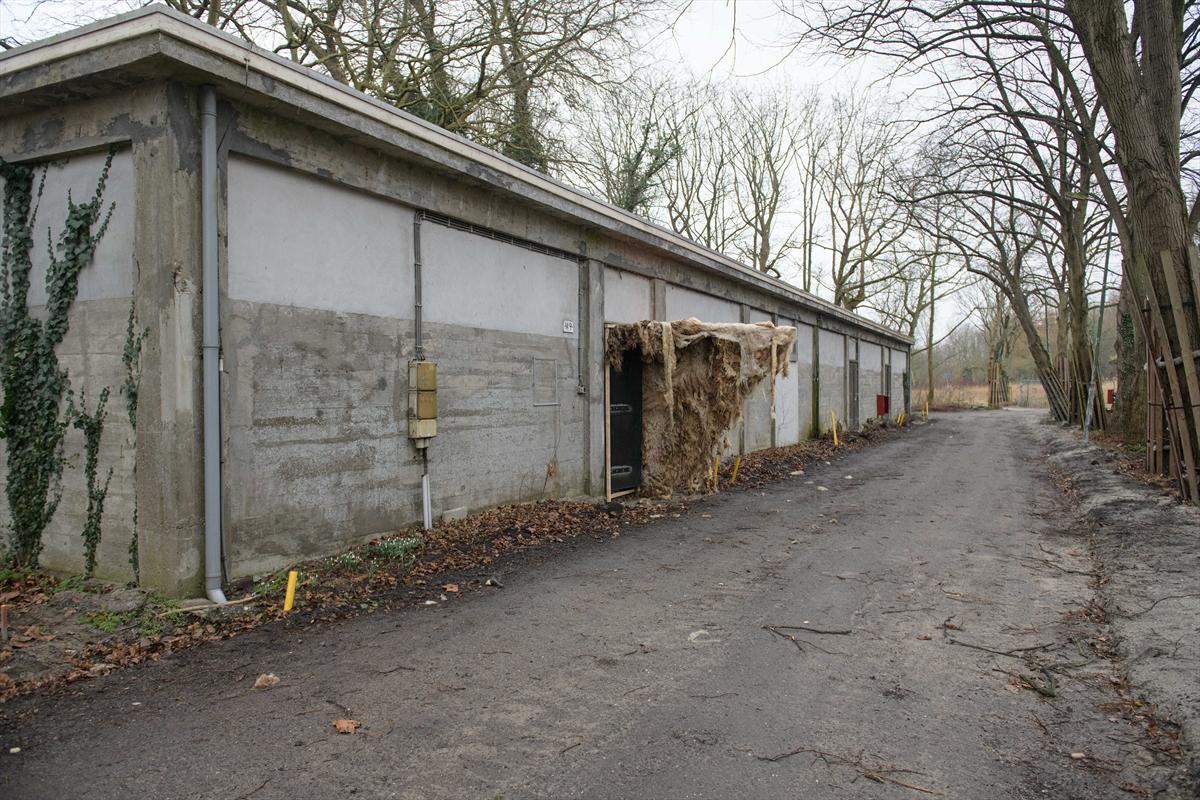
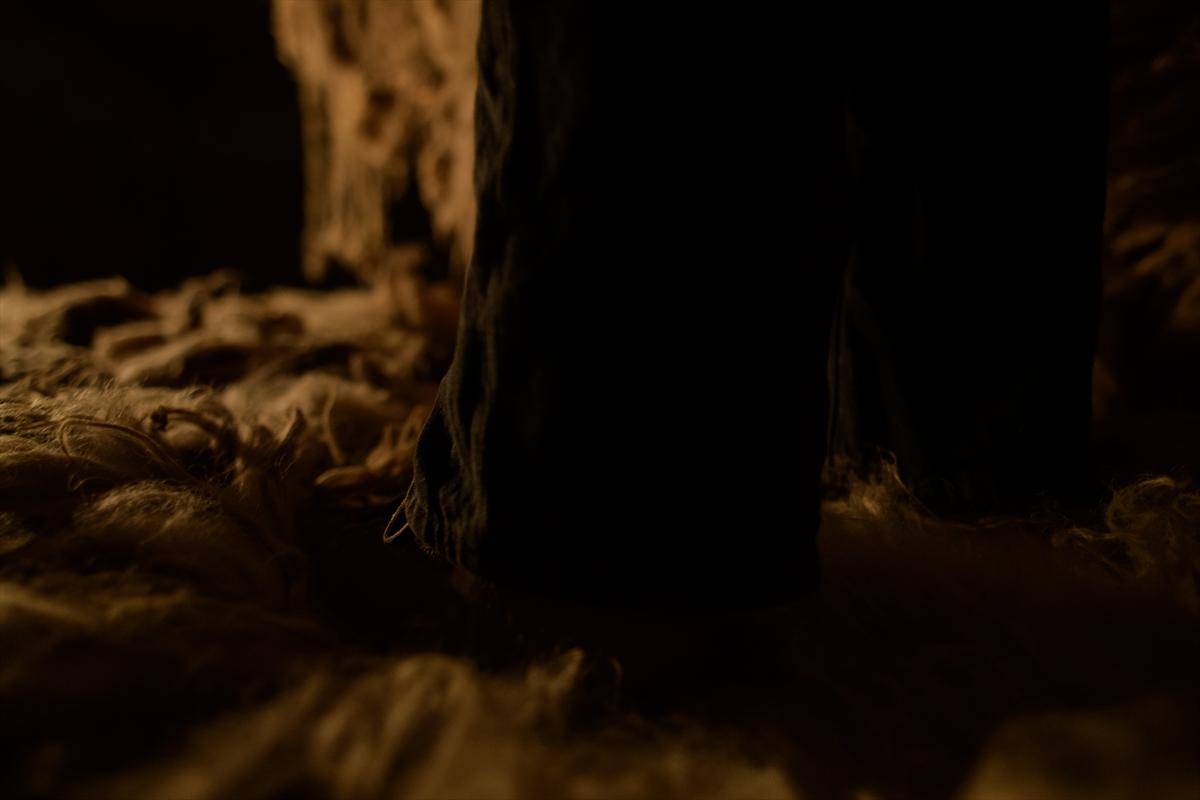
The entrance is lined with sheep’s wool, wall and floor. You walk into it, in the complete darkness of an old ammunition bunker, without knowing how far that softly scented wool still reaches. The smell of wool mixes with the sound of a falling drop — glycerine into a bucket. The dark makes a moment of stillness.
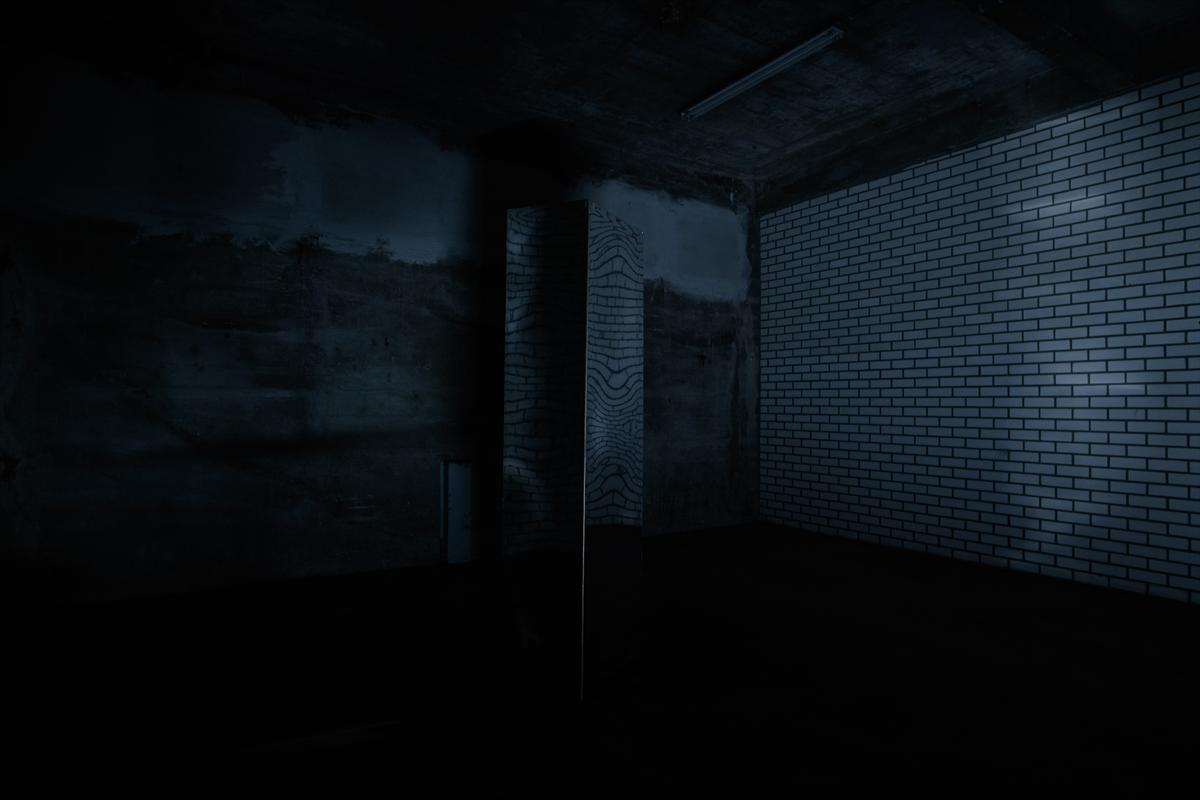
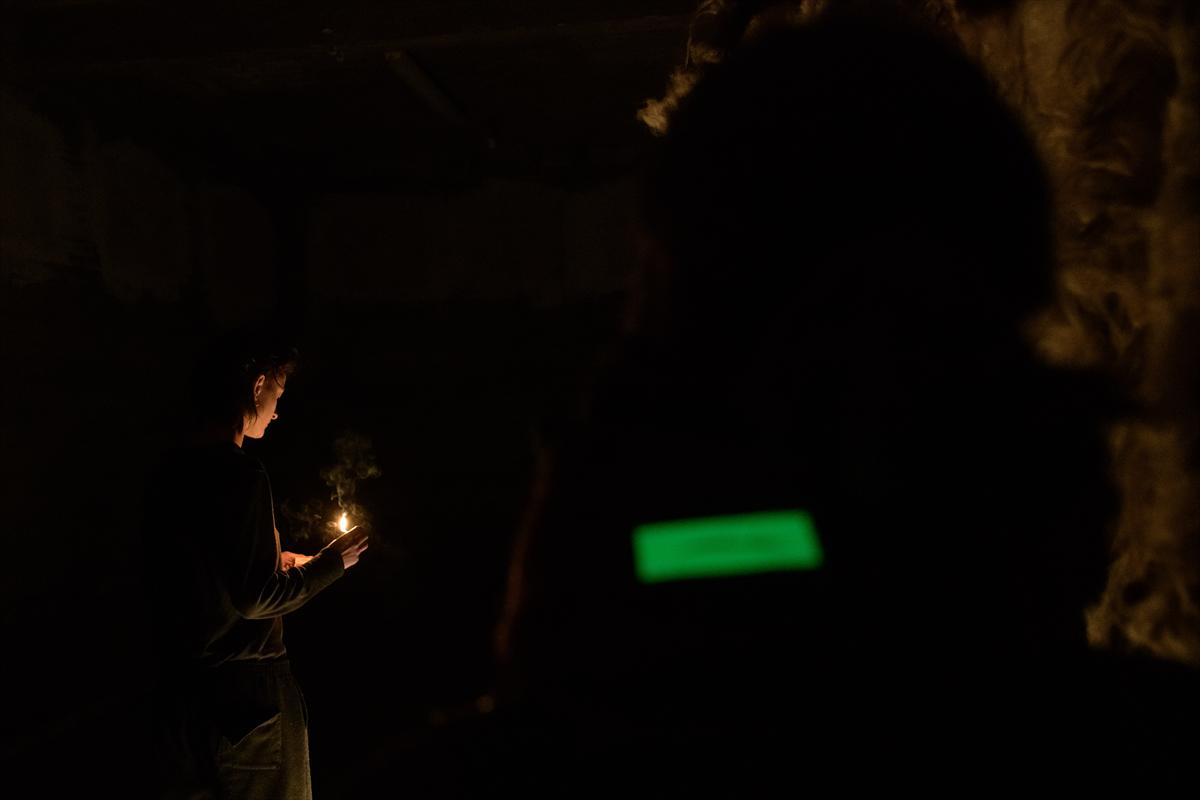
That stillness is broken by the flash of a match. Whoever lights it takes you further into the dark. Beyond hangs a mirror that can stand still and then is only a mirror, but that responds to a spectator’s movement and in that same instant becomes something living — something in which you are visible too.
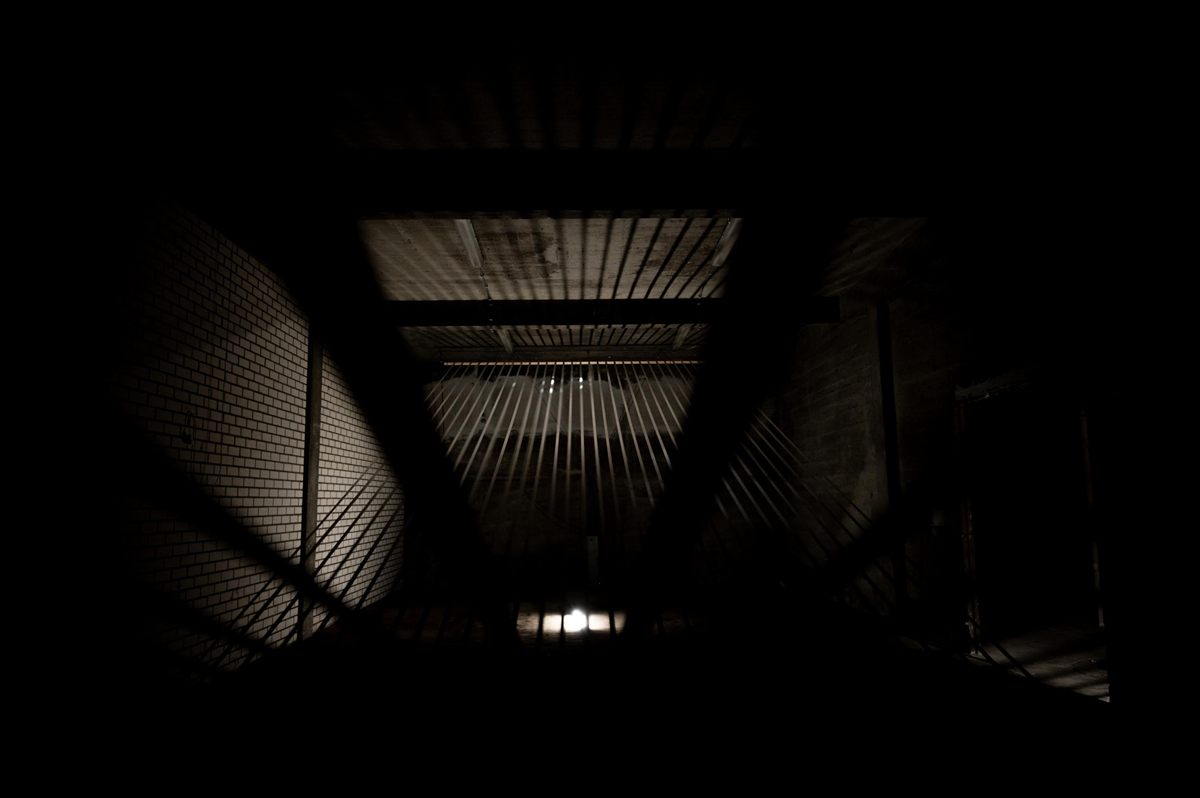
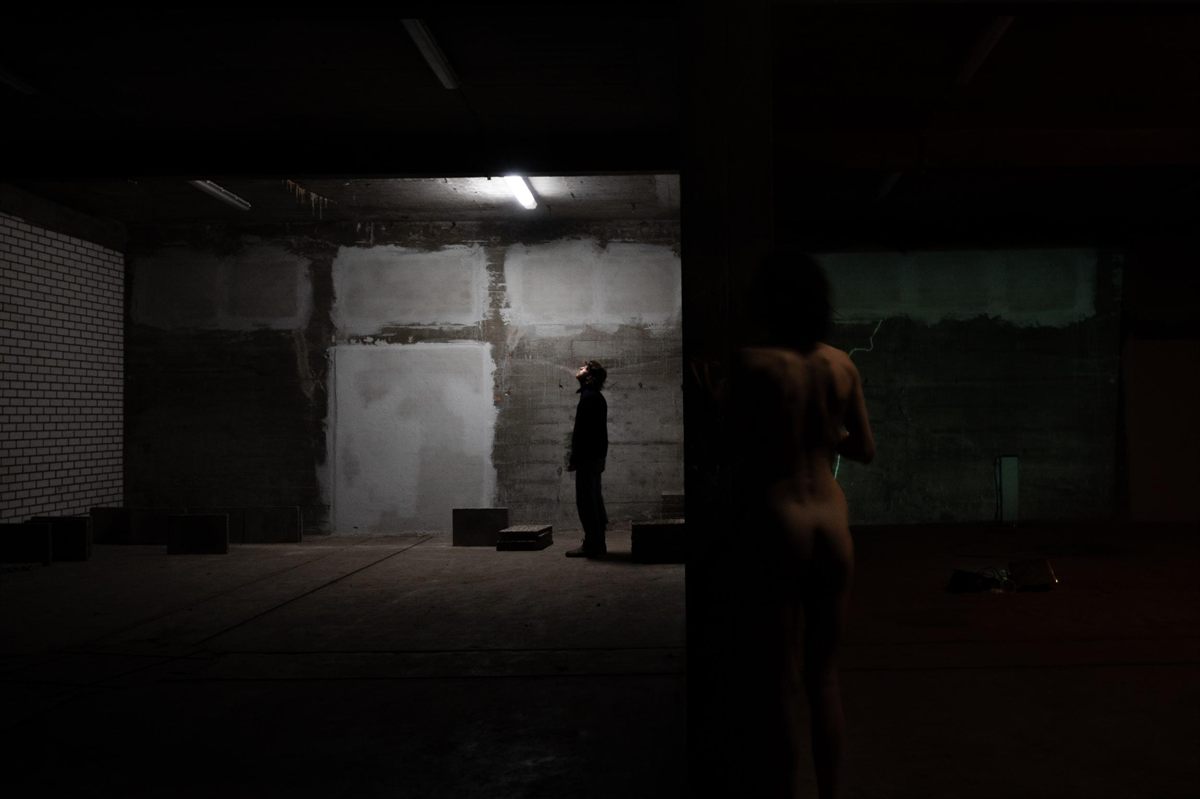
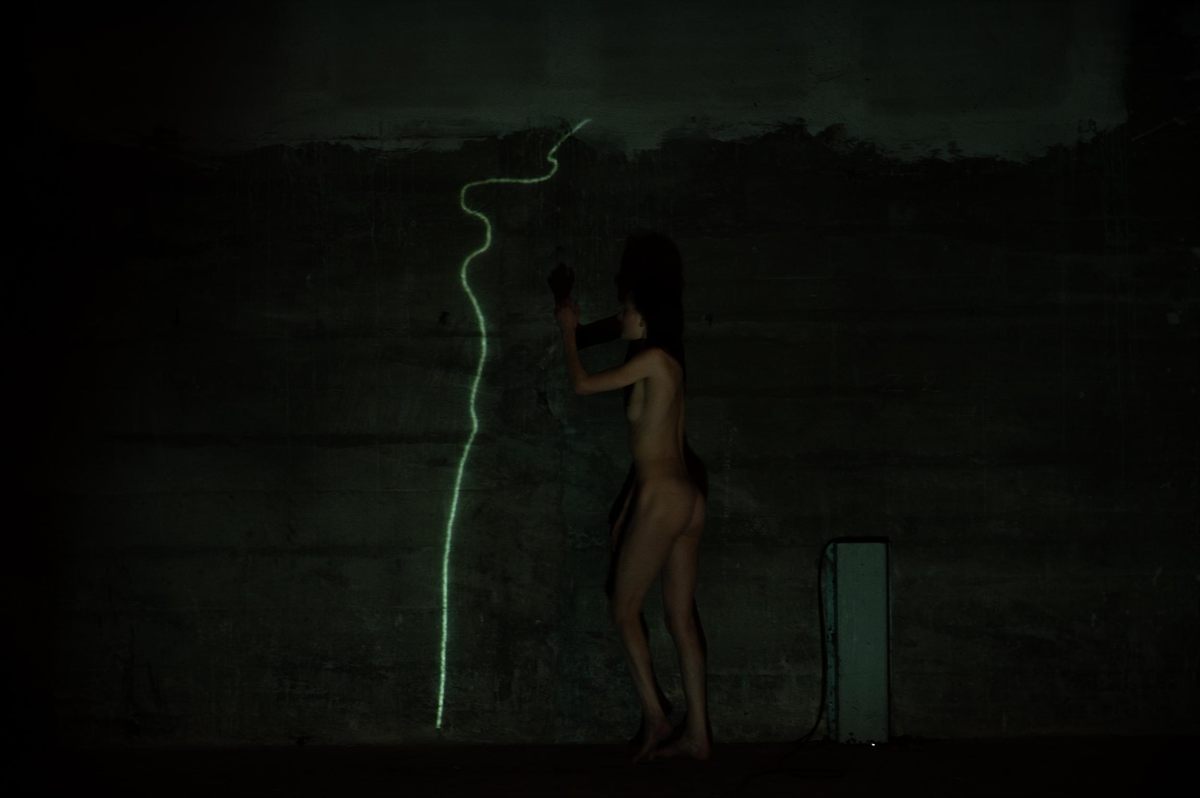
Then a dancer to soft music, who after a while begins to dance together with the concrete room; the space itself is given a voice in a line moving across the back wall. Then a ceiling of stretched elastics with a kink in it, permanently trembling, giving the room something insistent. And finally the outer door, opening slowly: light and sound as relief after half an hour of dark, thrown far down the corridor by mirrors. That is how you return to the world outside the bunker.
What I did
My part was the space and the making: I designed, drew and built the set, handled the technical side, and performed. In the process I pushed above all for it to become site-specific theatre rather than something you could just as well have put in a studio. Made with Thomas Maas (scenography), Pleuni Veen (mime) and Nadine Dekker; for Thomas and Pleuni it was their graduation work, for me a project from the Academy of Architecture.
More about the performance on the pages of Thomas Maas and Pleuni Veen.
- Location
- Hembrug site, Zaandam
- Year
- 2022 — 18, 19 and 20 February
- Form
- Site-specific performance
- Concept and performance
- Pleuni Veen, Ruben Dahmen, Thomas Maas
- Production
- Nadine Dekker
- Artistic advice
- Johannes Bellinkx, Marijn de Langen, Arien de Vries
- Status
- Performed
- Photography
- Robert van der Ree, Sam van Zoest
- Poster
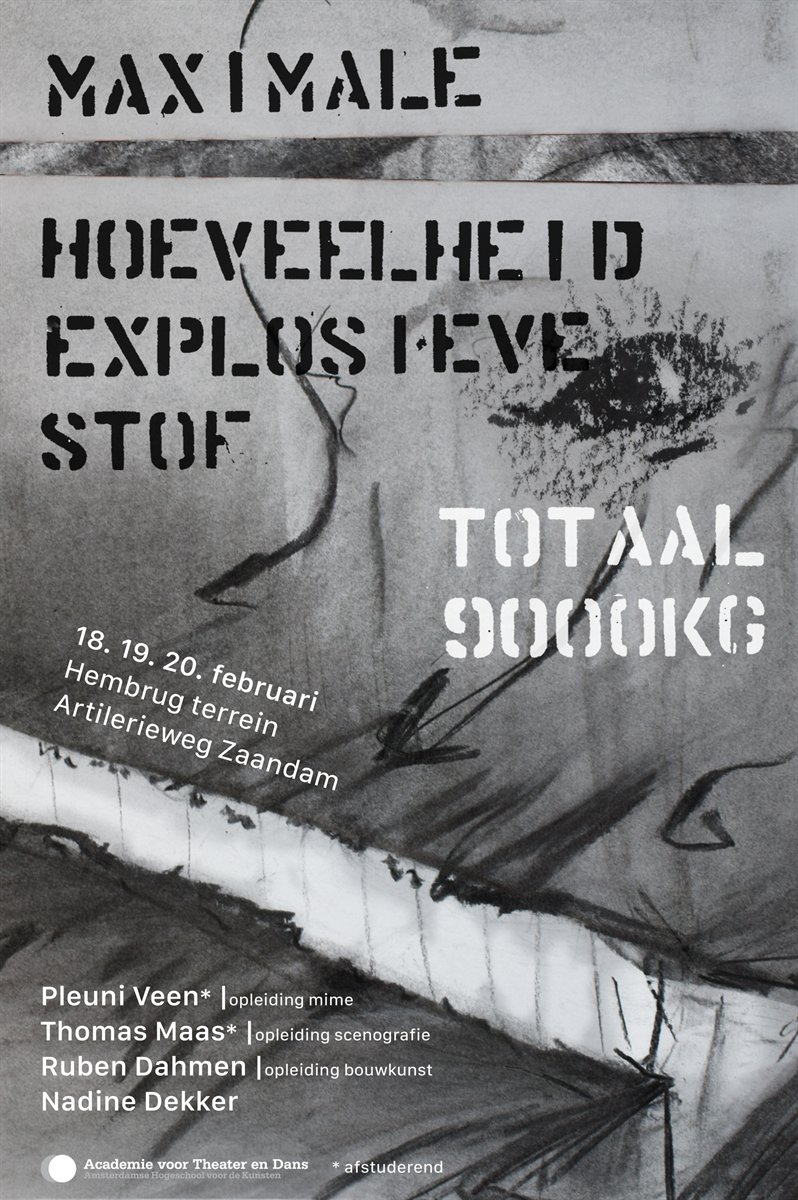
- Designed by Thomas Maas, shown with permission