Dromenvanger
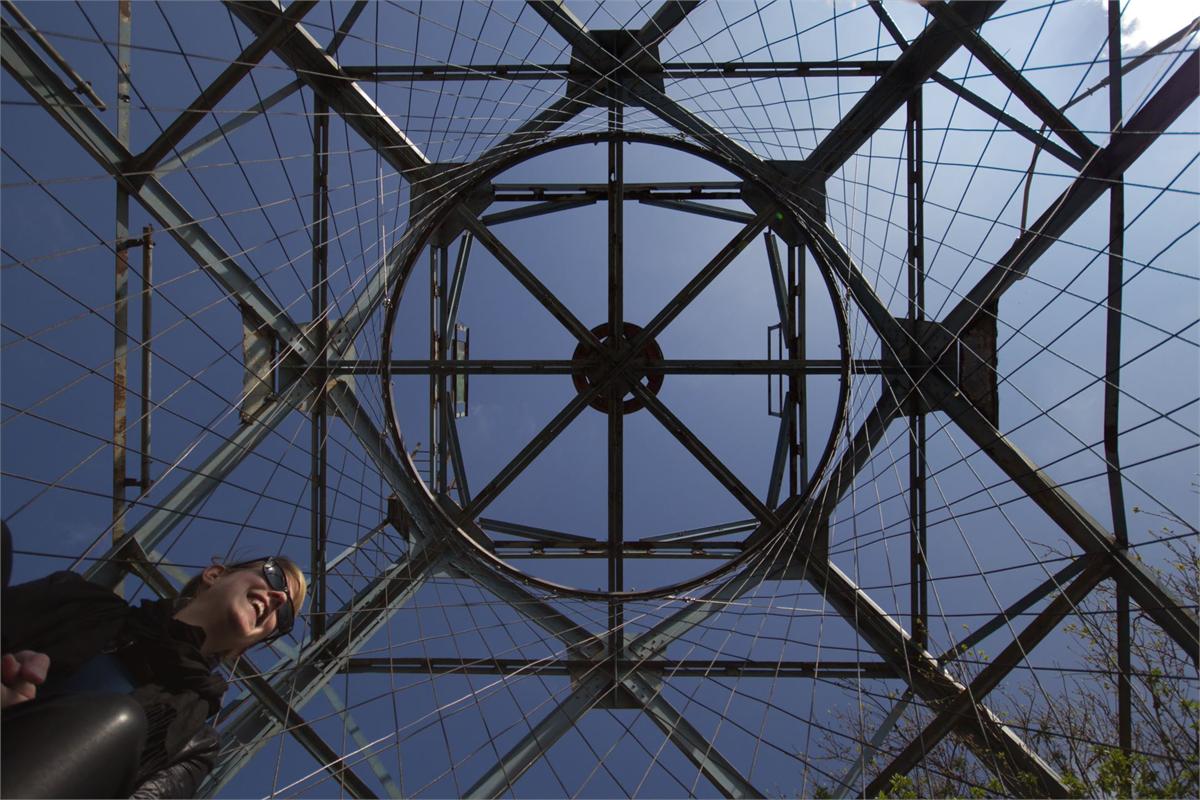



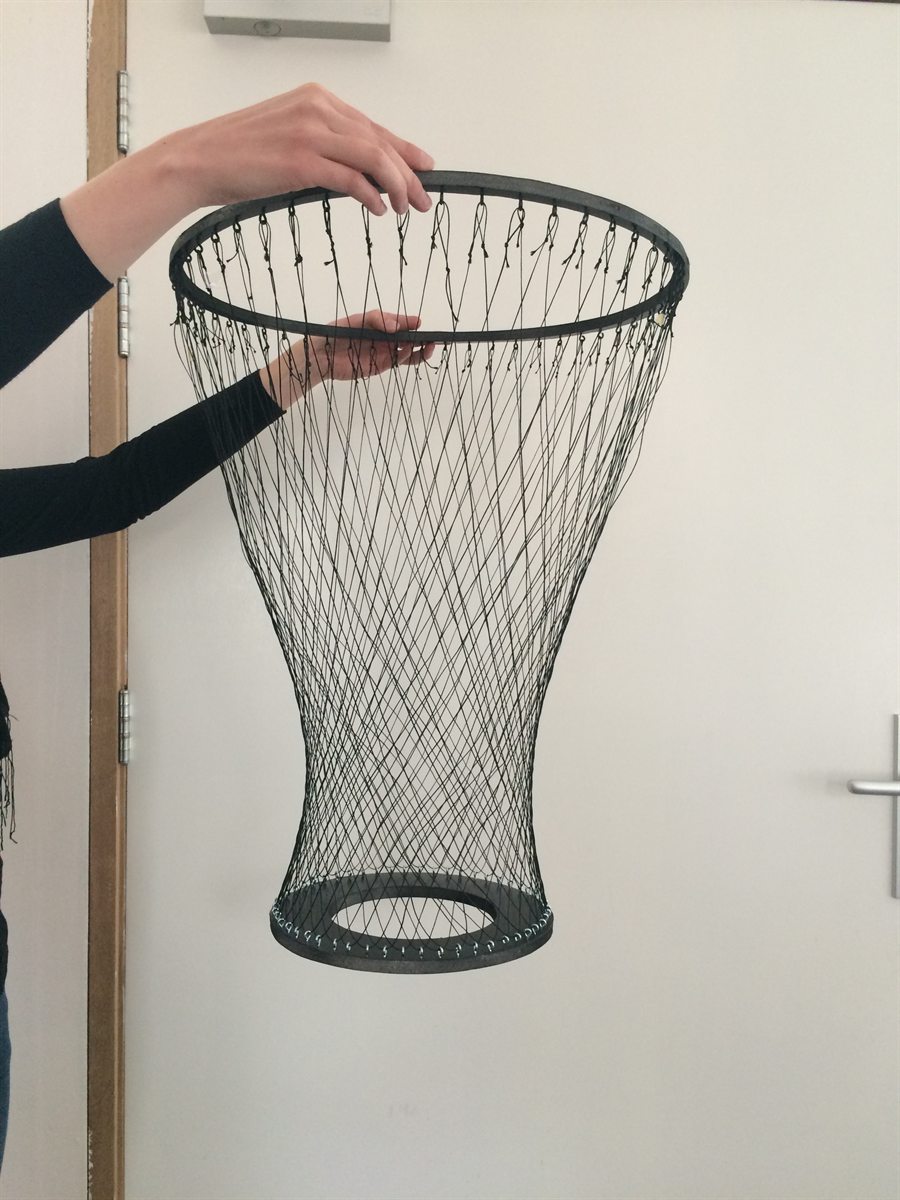
A dreamcatcher consists of two rings with a braided net between them. Bad dreams are caught in it and only the good ones are let through. Here that form has been manipulated until it became a spatial object you can climb into.
The place
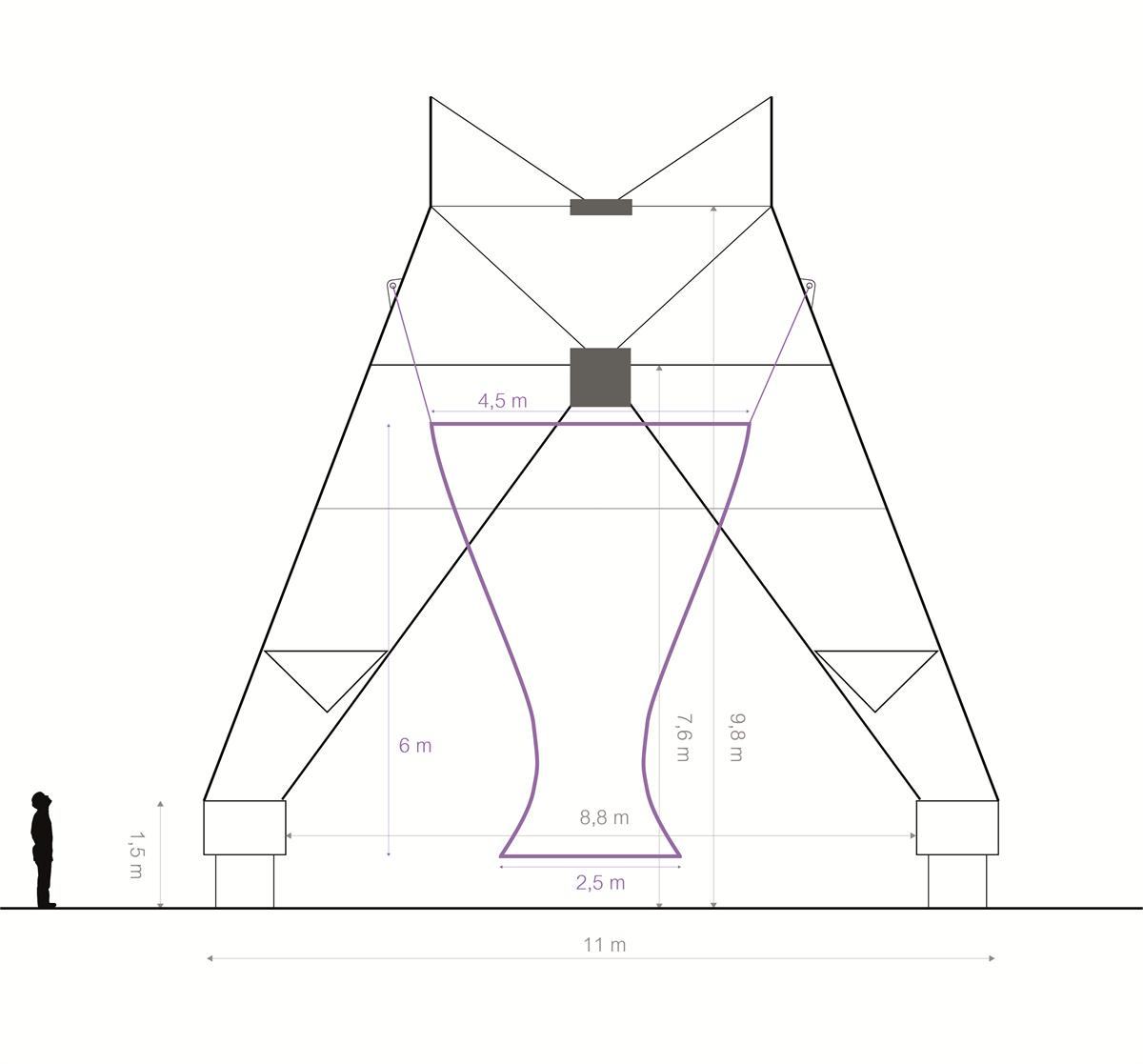
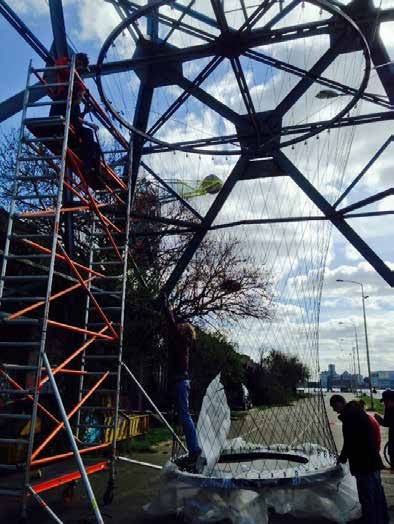
The Dromenvanger hangs inside the base of crane 7 at the NDSM shipyard, beside one of the old slipways. The top of the crane has been removed, but the base and the crane track are still intact. That track gives the crane a prominent place on the site and leads the eye towards it. The location belongs to the purple zone: the part of the yard where art, artists and visitors meet.
What it does
You can sit in the lower ring, inside the seclusion of the dense net. Because the object hangs free, that place can only be reached from below. The space within is enclosed: the view of the immediate surroundings blurs and opens upwards. What appears is an intimate place in the wide expanse of the yard, where good dreams get their chance.
How it was made
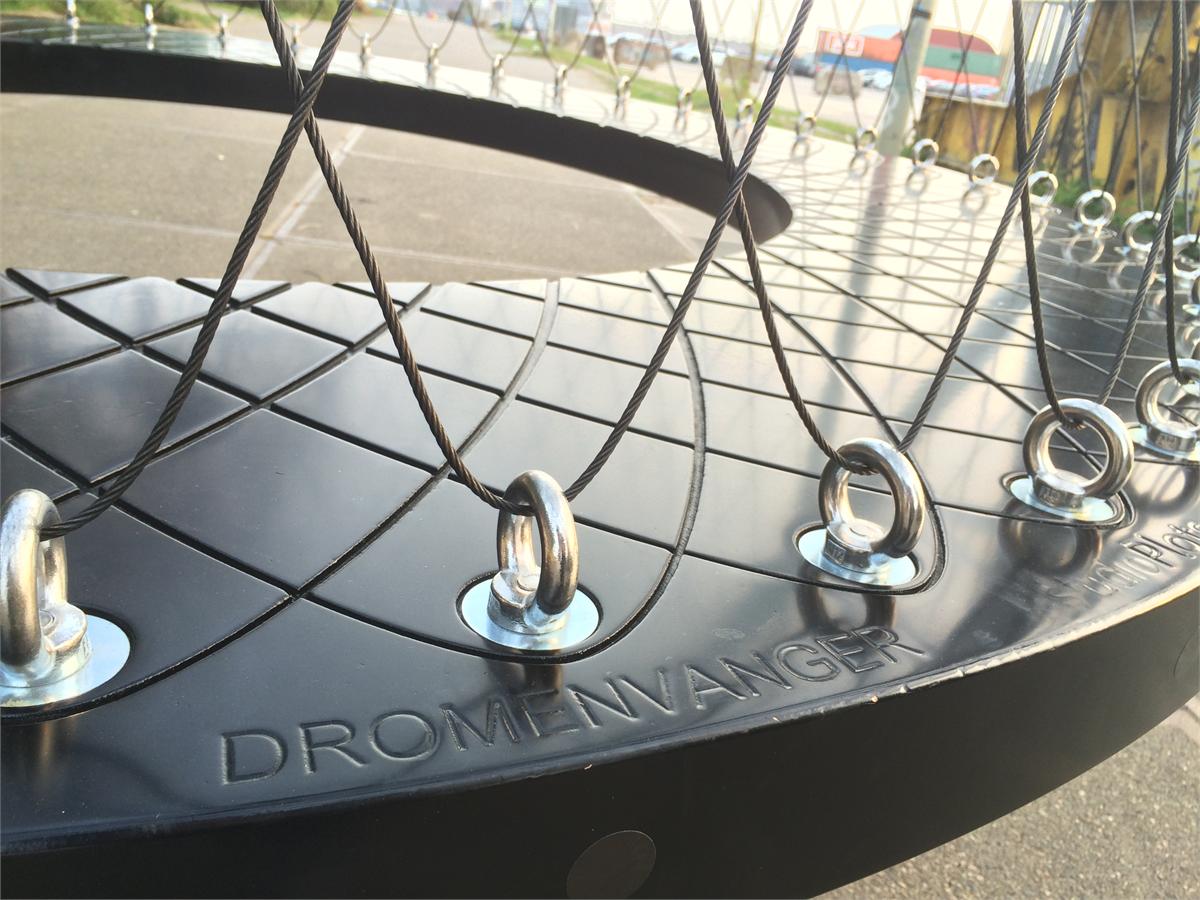
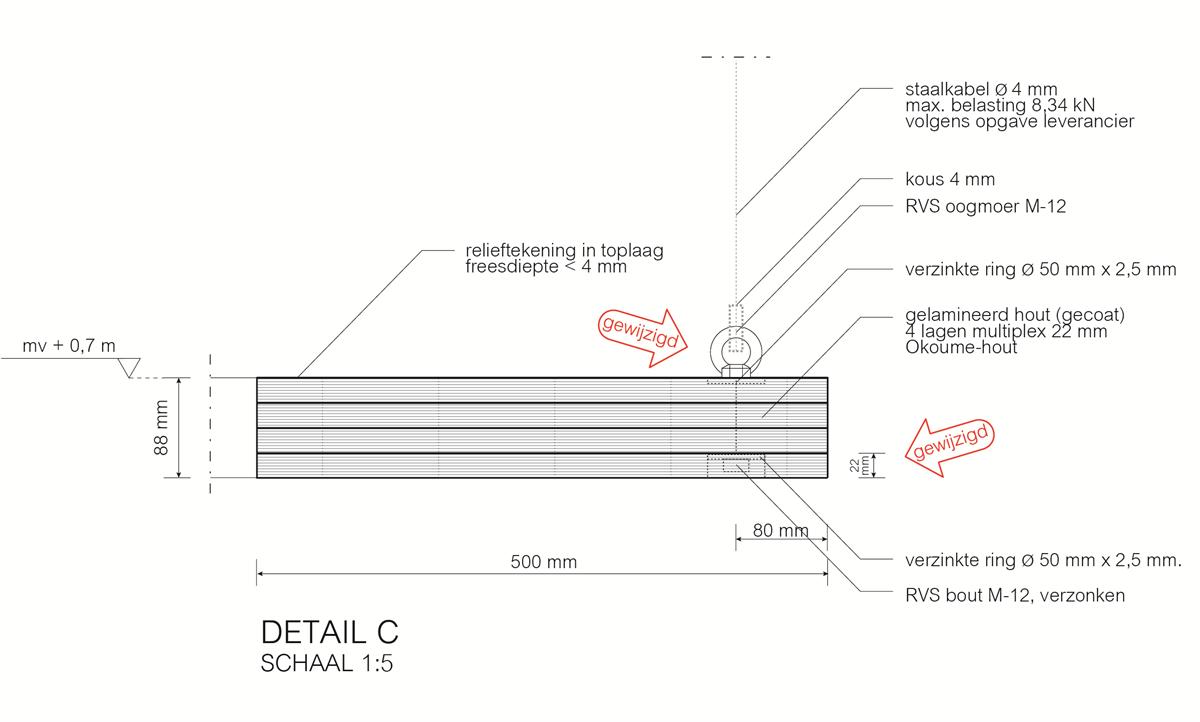
The Dromenvanger is built from heavy steel components, black steel cables and one solid timber element, so that it rhymes with the robustness of the former shipyard. The lower ring is made of four laminated layers of 22 millimetre okoumé plywood, coated, with countersunk bolts and stainless steel eye nuts holding the four millimetre cables.
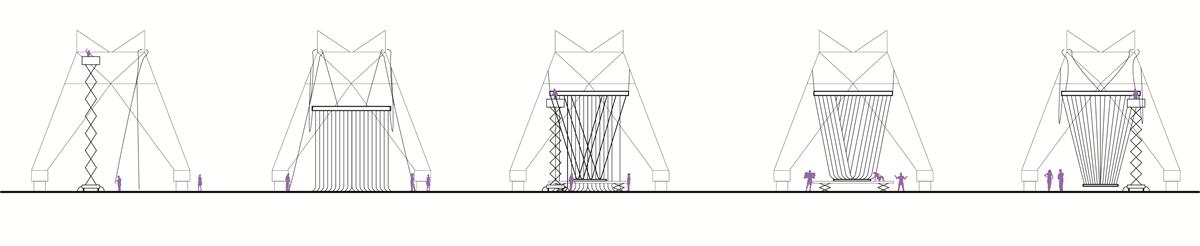
The whole was hung from the crane in five steps: first the lifting system and cables onto the crane, then hoisting the steel upper ring, then attaching the lower ring to the first eight cables, then braiding and tensioning each cable individually, and finally setting the whole to the right height. The structure measures roughly eleven metres across and almost ten metres in height.
Who made it
From beginning to end the project was made in collaboration with studio Plots, an architecture practice based in the Kunststad on the NDSM shipyard. Design and execution were done together. The Dromenvanger is part of the 2013–2016 arts programme of Stichting NDSM-werf and the cultural contribution of Mediawharf, with thanks to the Dienst Maatschappelijke Ontwikkeling of the City of Amsterdam.
- Location
- Crane 7, NDSM shipyard, Amsterdam-Noord
- Year
- 2015
- Collaboration
- studio Plots
- Build time
- One week
- Size
- About 11 m wide, 9.8 m high
- Material
- Steel, steel cable ø 4 mm, laminated okoumé plywood
- Part of
- Arts programme 2013–2016, Stichting NDSM-werf
- Status
- Realised; hung there for about three years
- Photography
- Our own